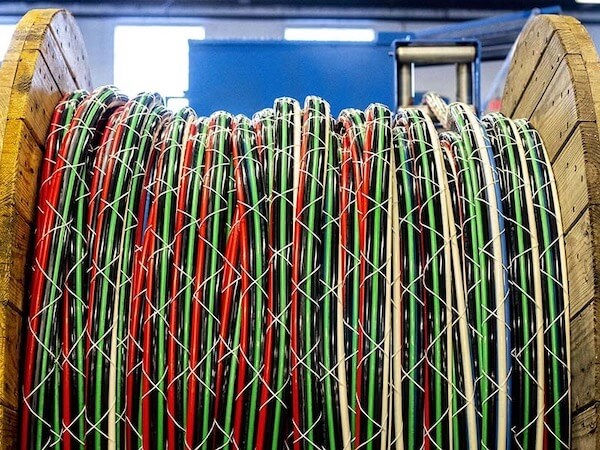
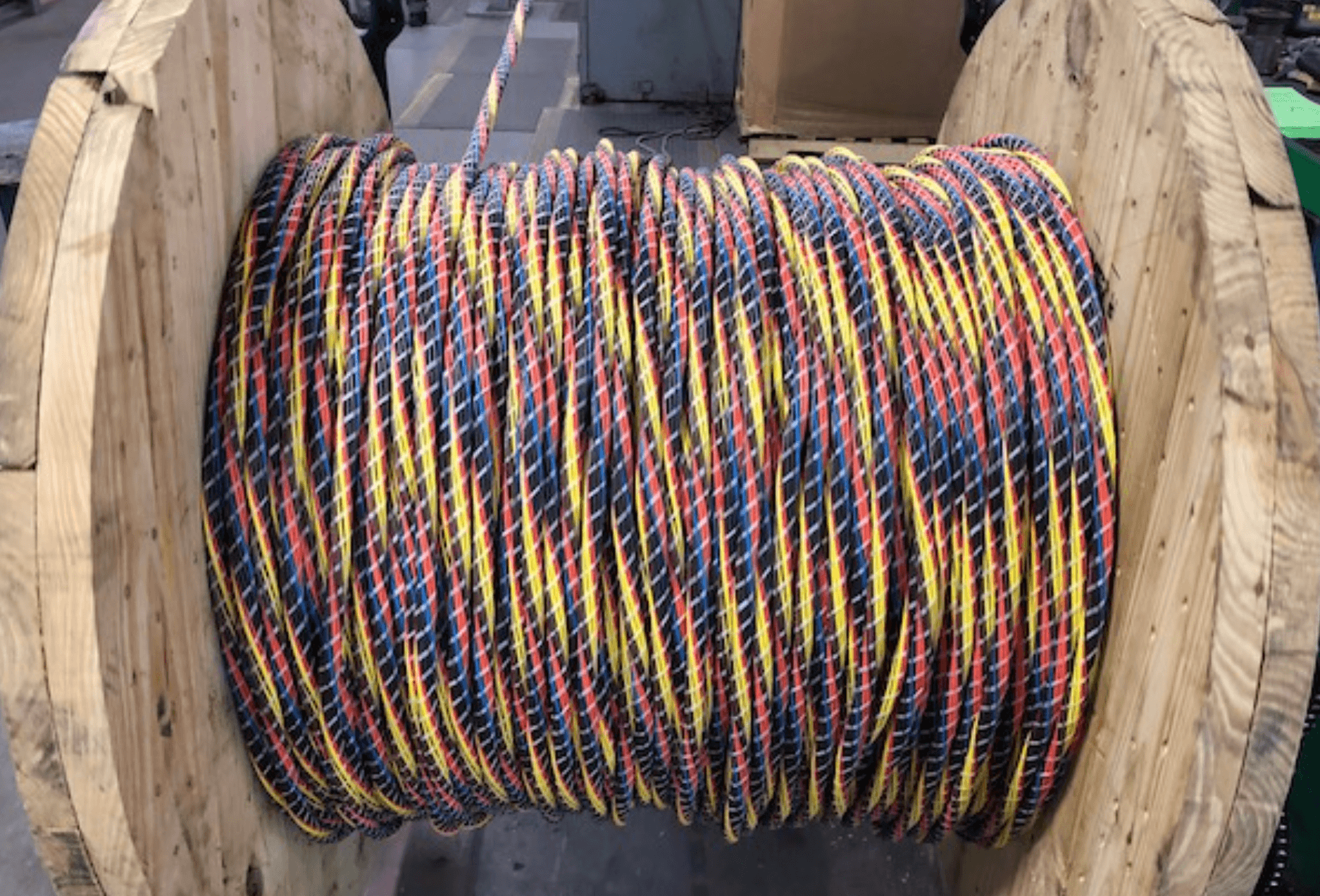
Each electrical installation project has its own unique demands. Our custom bundled cable configurations are manufactured with these demands in mind. For example, a Cat6 cable bundle for a data center application will require a different configuration from, say, an 18 conductor THHN bundle that will be used in for controls in automation equipment.
Specific configurations are designed to solve the problems faced by electrical contractors in specific installations. Since labor costs associated with each installation will reduce an electrical contractor’s overall profit margins, their choice for a bundled cable configuration is critical for their bottom line.
Depending on the project, different configurations are better suited to maximize efficiency andtime to completion on the job site.
So when would an electrical contractor choose a spiral, staggered, or straight configuration?
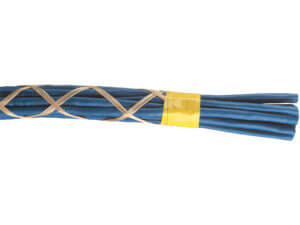
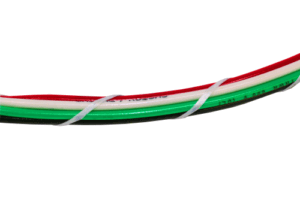
Spiral cable assemblies are great for electrical installations where the minimum outside diameter and maximum flexibility are required (such as home runs) to be run through conduit with numerous or sharp bends.
Though the binding is very compact, spiral configurations maintain a round shape that maintains the flexibility qualities of the wire contained in the bundle which helps to prevent hang ups.
Additionally, spiral cable bundles do not change their proportion when bent.
It is often used for long pulls in conduit where all conductors will be carried end-to-end, or numerous bends in the conduit could cause hang ups.
Straight configurations are often used for assemblies laid in place such as composites of electronic cables (both with or without building wire).
Straight bundled cable configurations are often used in home runs as well as in conduits and trays. It is not uncommon for them to be used in an un-spiraled structure to minimize heat build-up in power wires 12 AWG or larger.
Though less flexible than a spiral configuration, a straight configuration works just as well as a spiral assembly so long as flexibility is not a primary concern for an electrical contractor.
Straight configurations are available for wire types that include coax, fiber optic, data and build/fixture wires.
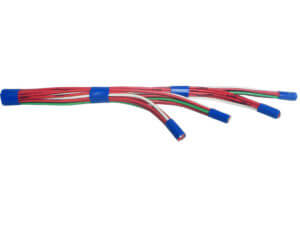
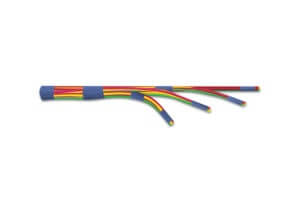
Staggered bundle cable configurations are used in installations where the exact measurements of breakout points can be specified at the time that the order is placed.
The breakout conductors can have various length tails and be bundled at one or both ends.
Staggered configurations are commonly used in solar farms, commercial and roof top installations, elevator and lift systems, and conveyor automation machines.
Common applications:
Solar Farms
Data Centers
Fire Alarm Systems
Security Systems
Elevator and Lift Systems
Rooftop installations
Automated Conveyor Belt Systems
Manufacturing assembly lines
To learn more about our various configurations and their applications, visit our configuration spec sheets.
There are various industry terms for organizing wire: structured wiring, structured cable systems, wire and cable management systems etc… They all have the same basic meaning though. The goal is to organize the wire and cable in your office, factory, building, machinery, equipment, data center, security system in a neat and organized way to avoid the tangled mess of cords running loosely so that the wires themselves can be easily traced back. In other words, it is about creating a plan to keep the wires together in a safe, organized and functional format that keeps them tidy and easy to manage. Bundling wires and cables does just that.
When electricians bundle cables and wire conductors together, they have several options, which are contingent on the wire and cable type, the electrical code regulations and restrictions, and the manner of installation.
Neat and organized wiring is one of the ways you can tell that an electrician or IT installer takes pride in their work, and if an electric panel is wired by a professional electrician, or if those communications cables are run by an IT professional all the cable and wires are held neatly together. From breakers in an electrical panel where on the right or left side of the panel they exit the box on the same side.
This requires planning and careful execution, and the completed work sometimes resembles a wiring diagram, with each wire turning at a just the right angles next to the connection before it heads up or down and out to the next connection point. In cases like this one might automatically think zip ties or velcro strips would be the solution for these generally short runs, but often it is not.
The most common choices to bundle wire and cable are:
zip ties
velcro straps
electrical tape
nylon harnesses
So what’s the best type of binding for cable bundles?
It depends.
One-Pull’s wire bundles are all bound with a waxed nylon string into a harness. While there are specific advantages for using waxed nylon binder thread for long runs, there are advantages and disadvantages to each of these cable management solutions.
If the cables are being run over a distance through cable tray, along a floorboard, or over head by j hooks, zip ties may be the right solution if applied correctly. Even Velcro strips may work in this situation if applied close enough together. However, for an electrical panel or in a conduit, zip ties or Velcro strips can be dangerous.
The nylon harness is a good way to keep wire and cable bundled together neatly, efficiently, and effectively. Since the surface area of the binder is minimal it is less likely to snag than a material that wraps around the whole circumference of the bundles. The binder is less likely to damage the wire or cables. Itf applied correctly, the nylon binder can be used with high voltage or low voltage wire and cable, prevents the cables from separating or sagging, and allows just enough space for the wire to dissipate some of the heat generated. It is for all the reasons that the nylon harness is the superior method of bundling, but it too has its drawbacks.
If you are organizing a desk or single workstation, it does not make sense. If you are organizing a short run of cable, say 5 ft, it does not make sense. If you need to continuously add or subtract wires and cables from the configuration, it does not make sense. However, if you are installing over a large distance, and you want to keep the cables together, and the installation is going to be permanent or semi-permanent that the nylon harness is the best choice. For a quick recap, see the list of the pros and cons below:
1) Zip Ties
Advantages
Good for short and long runs of communication and data wire
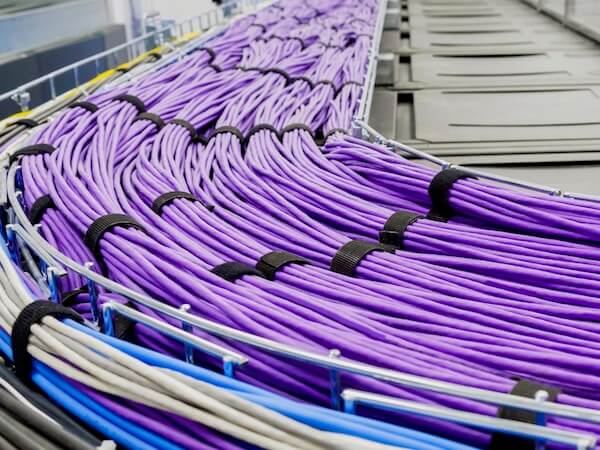
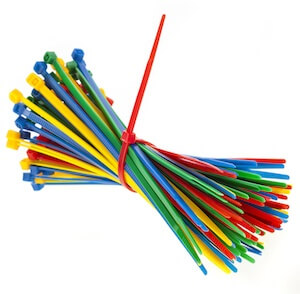
Good for binding together a number of wires connecting computer computers to the wall [image]
Good for organizing wires so that people don’t trip over them
A quick solutions for creating a tidier workplace
They are inexpensive to purchase. You can buy a pack of 100 on Amazon for $5.99.
Disadvantages
If pulled too tightly, it can damage the wire
It’s cumbersome to remove if you need to make changes to the number of conductors, or even the location to the device where the cable need to run.
For large bundles and runs, an electrician can spend a lot of time repeating applying multiple zip ties.
The zip ties, depending on application and cable and wire type may not be even allowed to bundle cables running into a conduit.
If allowed in conduit, since the zip ties have a thick tail, it can get caught or snag when pulling the bundle through conduit or even tray
Tighter bundles can increase the build-up of heat between the conductors. Because of such, some electrical code will not allow this type of bundling to take effect as it presents a potential fire hazard if the cables overheat too much. And zip ties should never be used with higher voltage wire without appropriate derating of the wire and we would still recommend against using them with high voltage wire even if technically allowable.
Only applicable for low voltage cable by code in conduit, high voltage cables do not allow any foreign objects in the conduit or tray
Overall
Zip ties are ideal for small and long runs of low voltage cable such as data or communication cable, as well as home use and small budgets since they are cheap to purchase. However, they have inefficiencies and even cause dangerous conditions, when it comes to large jobs using high voltage wire. This is especially true for pulling long high voltage wire runs through tray and conduit installations. If the zip ties get stuck in a conduit, you’ll end up paying more in terms of labor costs than had you used a more expensive material, but one that would have still saved time on getting the job done. In addition, applying zip ties to the wrong situation can open you up to a whole lot of avoidable liability.
2) Velcro
Advantages
Easy to apply
Since it is soft it is unlikely to damage the wire
The velcro pull tabs makes them easy to tighten, remove, and reuse
Good for data cabling applications
It is an alternative to an “H stitch”
Useful for adding additional runs since the velcro can be quickly detached
Disadvantages
The zip ties can fray over time—there are only so many uses before the velcro begins to tear
Like the zip ties (although not as prominent), the velcro bindings thickness can result in a cable bundle getting caught on something when being pulling through a long conduit or tray
Worse if the strips comes off, or slides down and bunch the contractor’s cable could become stuck in the conduit requiring much more effort, time and money to get the job done.
It’s not applicable on any wires that tend to get hot (such as power wires)
Only applicable for low voltage cable by code, high voltage cables do not allow any foreign objects in the conduit or tray and like Zip ties Velcro wraps qualify as a foreign object.
Overall
Velcro has good applications Data centers and IT solutions but has limited applications for industrial and commercial construction, particularly since it is thick (increased chance of it snagging) and it is not suitable for high voltage wire.
3) Electrical Tape
Advantages
Holds the wires together while still being loose enough for the wires to “breathe” or allow the heat to disperse and not build.
Can be quickly released as feeding through conduit with high voltage wires, which eases the pull as the individual wires are more flexible in curves, angles, and bends
Less expensive than velcro straps; you can purchase a multi-color 5 pack for 8.99
Leaves minimal sticky residue
However, due to the low stickiness of Electrical Tape it also can be pushed
Disadvantages
Electrical tape/Pull tabs are not very durable and can be easily snapped
Since the width of the tape must wrap around the bundle completely, it creates a larger surface area that is more susceptible to snagging.
Bundles made with electrical tape are very loose in between the area where the tape is applied on the cables. This will lead to sagging and less aesthetically looking cables, especially if run over head on “J” hooks
Electrical tape again may not be approved in the electrical conduit itself, and is considered a foreign object by most electrical code books. Electrical tape has its valid function in the code, but just as a method to hold the wires together in high voltage conduit is not one of them.
Overall
Electricians love the ease and cost of using electrical tape. In fact we use them as pull tabs on our nylon harness wire bundles. It is a popular, cost-effective way to bind wires together. But for long runs, it can consume a lot of the electrician’s time, even though the material is comparatively inexpensive, the electrician ends up wasting time which translates into less time to do other work, which, ultimately, means less money.
For long runs or lots of repetitive short run, multi-conductor cable bundles, they nylon harness bundle is king.
4) Nylon Harnesses
Advantages
Has excellent heat resistance [and can even be plenum rated] which makes it good for high voltage, or use in “public” spaces or transportation applications.
Holds the bundled together tightly while also providing enough room to breathe.
The binding is tight enough to limit sag, which is good when an electrician is pulling handing bundles on a ceiling grid
Less likely to catch than something that goes all the way around the nylon
Saves time for repetitive, long bundles
A well applied nylon harness is less likely to snag on conduit or tray (outside of loose wire) when being pulled than velcro or zip tie
Good for large, multi-conductor bundles
Ideal for long runs in commercial construction
If plenum rated, has excellent fire safety rating
Is allowed by electrical code as “part of the cable” to be run in any type of conduit or tray. Making it the only application for both high voltage and low voltage wire and cable in conduit or tray. While other options may be used for low voltage, the harness is the only approved for high voltage applications.
Disadvantages
Since the nylon harness spiral around the entire bundle (which could be 100 feet+ in length), it is designed to be more permanent than velcro
Adding and subtracting wire can be challenging since once the nylon harness is cut it will need to be replaced.
Cutting larger cables to smaller lengths requires remembering to tape off both sides of the cut everytime or the binder will come undone.
May require more pulling tension and lube to pull through certain aspects of conduit, bends, corners and angles in particular as the cable is more rigid.
Overall
We’re obviously a little bias since we specialize in manufacturing bundled cable encased in a nylon harness. Nonetheless all of these bindings have pros and cons which an electrician must weigh when they are on the job site.
By Rudy Hanecak, General Manager of One-Pull Wire and Cable Solutions
“Would you like HBO included in your bundled cable package?”
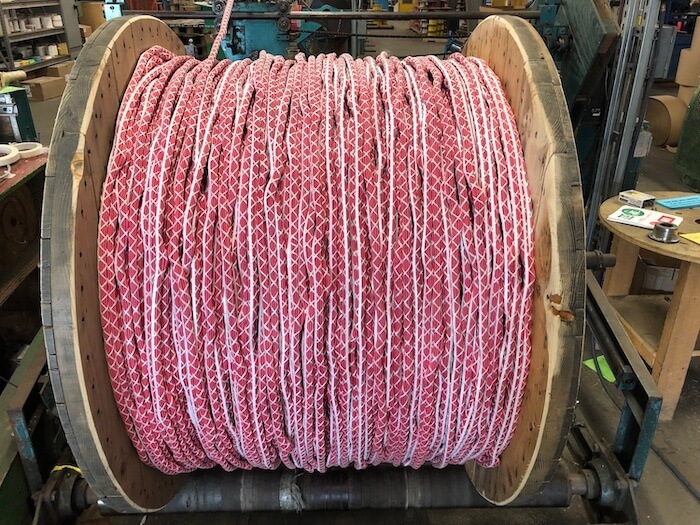
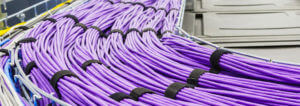
Nope, we’re not talking about that type of bundled cable. We’re talking about 20-conductor-or-more wire bundles that electrical contractors pull through tray and conduits, like these giants below:
Whether it is building wire, Cat5E, or most other wire products out there, pulling wire through conduit is a time intensive activity. Bundled cable simplifies the setup process and saves hours on the actual installation.
Furthermore, identifiable printed labels facilitate addressing any future maintenance problems or emergencies (I.e. solar farms). If accidental damage occurs during routine maintenance or reinstallation, the custom printing makes it easier to discover and fix the problem.
So who could benefit from these anaconda-size braids of wire? Simply put, any electrical contractor who works with dozens of cables that all need to be tagged and bundled stands to save money, time, and energy.
The benefits of the product are straightforward:
Results in a 40%+ time savings in conduit and tray installations
Custom printing and marking on individual conductors
Manufactured orders of over 150 plus conductors
Minimizes wire waste on the job (all lengths are custom)
Single reel setup per homerun
Reduces time spent on site setup
A value-added service for electrical distributors
Applicable in power, fire, signaling, water treatment, and data industries
Think of all the wire a contractor goes through, whether they are installing cable in a data center, a solar farm, a fire alarm system, or a commercial power plant. Tying 1,000 ft+ of 50-conductor Cat5e can take hours.
After all, who wants to tag and bundles these wires on the job site?
So what’s the difference between bundled Cable, speed pull, rapid pull, ready pull, one pull, thrifty pull?
Short answer:
Nothing
Though the practice of bundling cable has been around since the 70s, no dominant term arose for the product. Consequently, there are various names for the product. But at the end of the days they are refer to the same thing. What you see below:
We prefer the phrase bundled cable since it easily captures the features that define the product:
Spools of conductors that are bundled and printed based on customer specification
Easier than ordering an Internet Cable Package:
When it comes to purchasing bundled cable, the process is straight forward. Here are the steps:
Call or email the OEM cable bundler (in our case, sales@onepull.com)
Provide the number of conductors
How much footage you need
What type of wire
The harness and configuration type
Any specific printing requests
Provide a delivery address
Alright, by this point the bundled cable manufacturer should now have identified the wire the customer is looking for in their cable, the harness type, the configuration, as well as how many runs of conductors of the wire material are required.
Once we get that squared away, we can get to work turning this:
into colorful bundles like this:
Interested in learning more about the benefits of bundled cable? Use the contact form below and one of our bundled cable specialists will get back to you
It’s been an exciting start to September: Quik-Pull Wire is now a part of the One-Pull family! Officially on August 30, One-Pull acquired Quik-Pull from its parent-company, Memphis-based Power & Telephone Supply.
Now that Quik-Pull has joined One-Pull, we will be able to provide more products and faster lead times to electrical contractors throughout the United States.
Although the combined company name will be One-Pull, we will continue to use the Quik-Pull product line name in the future, along with Cable and Harness, which Quik-Pull merged with in 1999 when Vermont Cableworks was founded. Quik-Pull’s slogan is “The original. The best,” and its history lives up to that. Through this acquisition, One-Pull is excited to absorb the market knowledge, product and manufacturing expertise, and brand recognition of Quik-Pull.
Quik-Pull’s team has years of experience in bundled cable manufacturing. We are thrilled to be joined by their best-in-class management, operations, and sales team.
Now that One-Pull and Quik-Pull are together, our bundled cable operations and capabilities have expanded considerably. We are dedicated to fulfilling, manufacturing, and shipping wire bundles to electrical contractors as quickly as possible. Their bottom line depends on completing every job efficiently along with minimal wire waste.
Though our official brand name is One-Pull Wire and Cable, Quik-Pull will remain a name that is part of our product line. We will still refer to our cable bundles as quik pulls (sometimes spelled “quick pulls,” other times “quik pulls”).
The two organizations, now housed under one roof and one name, are excited about what the future holds.
Rob Reardon, One-Pull’s managing director, is thrilled about the organization’s future.
“With the acquisition of Quik-Pull we have increased our capacity and ability to provide very short lead-times. In addition, we will be able to manufacture more complex cable configurations such as spiral configurations and jacketed tray cable bundles. Electricians and electrical contractors are constantly asking ‘how do we save money and how do we become more competitive with project bids?’ Bundled cable will help them on both fronts. Studies have shown that the product can save end users up to 25% on their labor expenses as well as setup and termination time. We will spend much of our time giving product demonstrations and showing how much quicker bundled cable is compared to setting multiple reels,” he says.